Yes! There is more work in Haircare for Coloured Hair…

I’ve been wanting to talk about how often I have heard this reason people use for not coloring their hair: It’s often because in the past the hair colour (especially lightening) had “wrecked” their hair health and it didn’t look good the subsequent weeks after the process….and I have only one thing to say to that. That’s not really a reason not to colour! Lightening and colouring hair doesn’t have to be inherently damaging. Coloured hair does however require more work, time and cost to maintain it’s health afterwards. It’s the sentiment that anything that’s worth having takes WORK. It’s like how committing to a more streamlined body may require more hours at the gym, wherein the goal for exercise is no longer about health–it’s about achieving or maintaining a look. It’s about being willing to put in extra effort to get the look we want! As a hairdresser I know about the high cost of maintenance so I agree that for some, it’s sometimes not worth it. But for that practical reason, it’s a “different song and dance”.

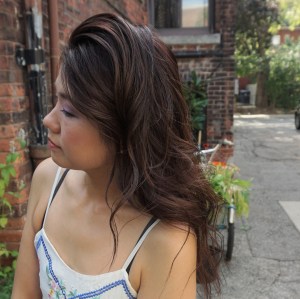
This is my hair colour when it’s not styled. But even so. a lot goes into this look including not washing it often, leave in treatments, oils…etc.

The Hurdles of Hair Colour And After-Care:

  1. Retouches: Hair grows…the last I checked, so that means after two months about an inch of regrowth is expected. While the natural hair color is okay on it’s own, the line that happens when the new growth meets existing artificial colour is usually not flattering. Here’s where maintenance is required. Refreshing the roots of the hair is a must and the most that a root smudge can do is prolong the need for refreshing.
  2. Re-toning: Even if a root retouch is not necessary, sometimes toning is. Artificial colour is not really permanent, even if it says it is. After exposure to shampoos and the sun, the hair colour will fade, leaving behind the brassiness that was previously covered up. Re-toning is often a procedure for blondes and cool toned brunettes when the colour fades.
  3. Excessive Dryness: because the cuticle of the hair needs to be lifted to be coloured, it never lies as flat as it did before dying. That means the hair strand’s ability to hold onto moisture will be compromised. Heavy conditioners with moisturizing properties must be utilize to maintain shine and mitigate frizz! Leave-ins and oils too!
  4. Weaker hair prone to breakage: Colouring hair depletes some of the proteins/keratins in the hair strand making it more prone to breakage. Keratin repair masks will be needed occasionally to help strengthen the hair and prevent breakage. This is especially true for blondes that were lifted starting from very dark bases.
  5. Change in haircare routines: Because coloured hair tends to be more fragile, it often benefits from less washing and styling. Shampooing lowers the natural pH in the hair and does cause it physical stress. We love the feeling of squeaky clean hair but seeking that too frequently comes at as cost. A new routine of less washing and more leave in conditioners and oils become the daily norm!
  6. Extra styling: Wash and go. That’s a term we all love! It means after shampooing and conditioning, little styling or products are needed. Air drying, and just a quick rough tumble under the hair dryer at most. But often after colouring, hair needs more styling to get the hair looking less frizzy; extra products and heat tools like a flat iron might be needed to make the hair look smooth!

Is this too much work and maintenance for having a different hair colour? But that is the true cost of hair colour…in the end, I guess it is to each their own. But that’s the reality of anything done for cosmetic reasons. It takes work. But doesn’t mean we shouldn’t do it! For me, hair is like a canvas for expression, but as an extension of our bodies, it is also more than that.
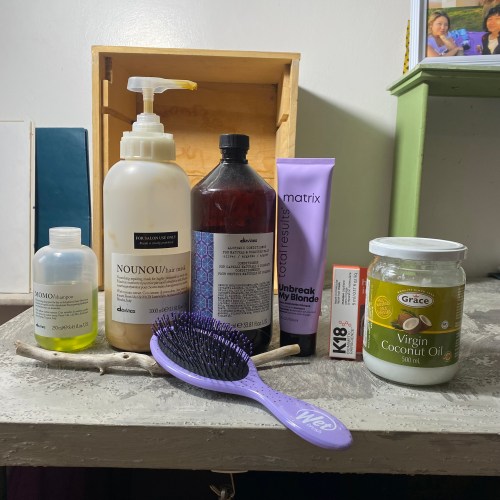

This is the heavy line up of arsenals I use for my blonde care! A gentle shampoo, moisture mask, purple toning conditioner, anti breakage leave in, K18 treatment, coconut oil, and a wet brush to name a few!!!!

What is brassiness in hair?

Okay so in the hair coloring world, this term is thrown around a lot, and it is often seen as a villain in hair color. Yes, we want rich brunettes, cool blondes, and vibrant reds, but brassiness? No, we avoid the color like the plague. But what is brassiness? How do we identify it? How do we get rid of it? These are all questions that used to boggle my mind until I went to hair school and got a deeper education in hair color. Brassiness is not really a color in my opinion.

To me, brassiness is actually the tones that are left behind when hair is absent of it’s cool pigments. It is the leftover color of hair that lightener doesn’t lift. For darker hair, that leftover is red/orange (unless more than 4 levels of lift is achieved), and for lighter hair the leftover pigment is orange/yellow. That leftover color (true “brassiness”) looks bad because it’s not an actual hair color, but a hair color under construction. The right color must be placed on top of it.

Brassiness often appears in hair that not lifted enough to support a lighter color, and too much warmth shows through the color. Another scenario is when toner (a hair color tint) used to correct yellowish blonde hair doesn’t take or washes out. And as a general rule even permanent hair dyes eventually wash out exposing brassy color in the hair

In the end, I don’t think brassiness is the enemy of hair color, but it’s the con of chemically lightning and coloring hair. Artificial colors will eventually fade and change due to the daily environment (sun, wind, shampoo, chlorine)…and fighting this change in hair color has become unfortunately routine  It’s with re-coloring faded color as a solution. It’s what hair colorists are here for and why as a business, there will always be repeat customers…I think it’s fine price to pay for our preferred hair color, as long as we give our hair a rest between color treatments.

I lightened myself to a level eight to try and support a pinky color… But even at a light level the leftover warmth shows through a bit making the color more of a peach. But I still like it! (not brassy because it’s wanted)

Go dark brunette, without a regret!

I love playing with hair color as one can probably tell from all my posts about hair dying over the years…I feel nothing feels fresher than a change of color. Natural black hair is gorgeous, but after a year of playing with lightener, aka bleach/peroxide, I have rocked lighter hair color all summer in the way going“bronde”, which is a very light brown. Being a dark brunette, I could never go to light butter blonde without killing my hair, but in general I have been wearing much lighter colors than I was born with.

But a recent resurgence in the brunette hair color has come about…basically because of the royally babe-alicious Meghan Markle. I think she really showed the world how amazing dark brown hair can be since getting engaged and married to Prince Harry really put her in the spotlight.. She set the bar high for a representation of brunette beauty, and it has inspired me to let go of my beachy light locks, for a dark chocolatey brown; a refreshing look for my sister’s upcoming wedding.

The new Duchess always made dark hair so glamorous. (Photo by Max Mumby/Indigo/Getty Images)

No regrets

In the past I have gone darker with tons of regret, and I’ve learned a lot from the mistakes I’ve made. All the pitfalls of dying darker were results in hair color that was either too dark, too green, too inky, or too flat. Here are my tips from going lighter to darker and loving it:

  1. Go for drama: Going only one shade darker will not be noticeable and has no mystery or depth. I recommend aiming for 3-4 shades darker for the freshest change. Sometimes it’s scary getting a dark color because it’s so intense! But I have a tip to combat this (see tip #4).
  2. .Choose demi-permanents: When getting hair darker, pigment is being added to the hair shaft, and only needs to be on the surface, unlike lightening that has to go deeper to remove color.  A less harsh way of dying is by using demi permanent colors. Because they use less peroxide, they are gentler to hair than permanent color, and add deeper tones. It’s also easier to lighten hair back with a demi if not truly satisfied.  Demis, unfortunately, will fade faster, but at least the fade will be less brassy since less pigment is lifted with a low peroxide dye.
  3. Notice the hair tone you are starting with: Previously lightened hair has a certain base tone to it that is very visible. It can be neutral, golden, red, or ashy. The base color that a darker color will lay over, should be on the warmer side, since red and gold tones are what makes dark hair pretty. If the starting hair color is very translucent and pigment free, sometimes adding an redish auburn color first is needed to create depth before adding a darker color on top.
  4. A trick I use for not going too dark and inky: Buying two shades. Demi permanent color always processes darker than the sample swatch since it is adding color and not lifting anything. For example, starting with light brown hair and adding a light brown demi, the results will be dark brown because of layering. To keep hair from being too intense in darkness, I like to dilute my dark shade with a blonde or clear color by a ratio of 1:1 and use the right amount of activator accordingly. This makes sure you are getting the dark color you want, while the texture of each strand and subtle highlights are still visible…resulting in more faceted color.
My Own Results

To get my hair to Meghan Markle dark, I had to be careful or else I would get something too dark and flat. So I used an ashy brown mix of colors on my warm roots, (Wella Demi in 5N and 7A) and then a neutral brown mix on my midshaft and ends, since they had an ashy light tone (wella demi in 5N+8N). I diluted the brown color by adding some blonde shades to both mixes of color.

See how in the sun, it’s visible how the back and ends of my hair picked up the dark demi permanent differently. It was also ashier because of previous lightening.

The only thing I had to tweak after darkening was the different color on my midshaft and ends. The back of my hair was so light from previous dye jobs, it didn’t pick up the demi fully, and was also a cooler tone. I fixed this by doing another treatment, a rinse of auburn red in a semi permanent color. (Semi permanent is peroxide free and like a conditioner with dye, no activator needed). And now hopefully, I feel my hair is uniformly dark and mysterious!

After the rinse in an auburn red semi permanent to fill in my mid-shaft and ends. Nice and evenly dark. Yay!